
Resveratrol: Polyphenol Pathways to Youth
Abstract
Resveratrol is a plant-derived stilbene with pleiotropic anti-aging effects. It activates sirtuin pathways, enhances mitochondrial function, and reduces inflammation, offering a nutrigenomic route to longevity.
Introduction
Resveratrol gained attention through the ‘French Paradox’ and its ability to mimic caloric restriction. At the molecular level, it influences transcriptional regulators like SIRT1 and AMPK, improving cellular energy homeostasis and stress resistance.
Mechanism of Action
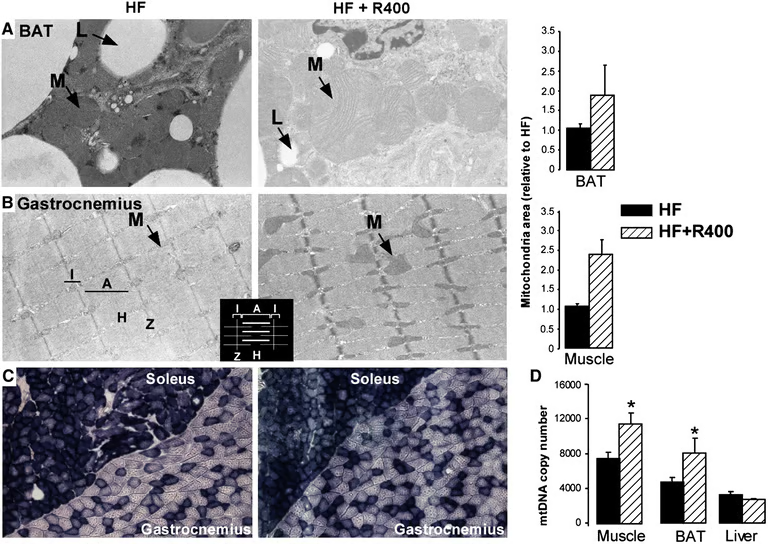
Resveratrol activates SIRT1, enhancing mitochondrial biogenesis and antioxidant defense. It reduces NF-κB signaling, suppressing chronic inflammation linked to age-related disease.
Scientific Evidence
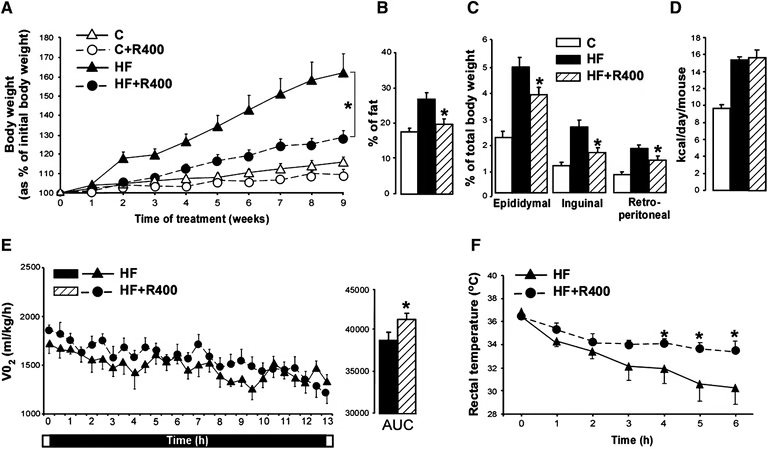
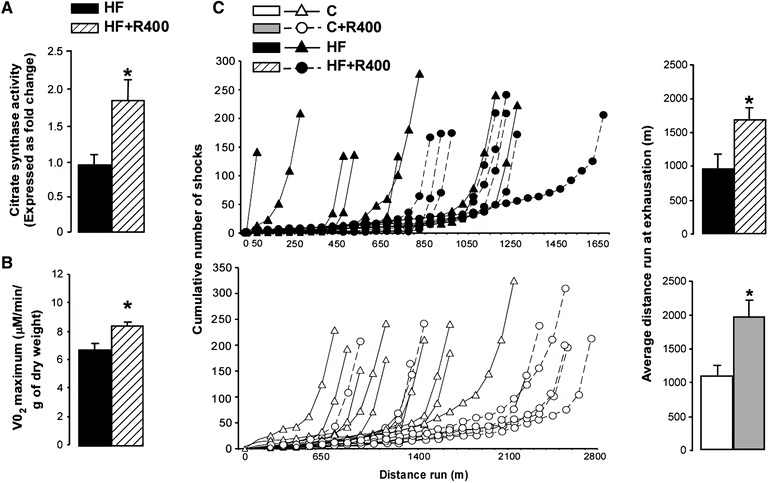
• Studies in mice have shown resveratrol improves insulin sensitivity and extends lifespan under high-fat diet conditions.
• In vitro research supports its role in protecting endothelial cells and reducing oxidative damage.
Conclusion
Resveratrol represents a potent natural activator of longevity pathways. Its polyphenolic actions promote cellular balance and metabolic resilience.
References
-
Baur, J. A., Pearson, K. J., Price, N. L., Jamieson, H. A., Lerin, C., Kalra, A., … & Sinclair, D. A. (2006). Resveratrol improves health and survival of mice on a high-calorie diet. Nature, 444(7117), 337–342. https://doi.org/10.1038/nature05354
-
Lagouge, M., Argmann, C., Gerhart-Hines, Z., Meziane, H., Lerin, C., Daussin, F., … & Auwerx, J. (2006). Resveratrol improves mitochondrial function and protects against metabolic disease by activating SIRT1 and PGC-1α. Cell, 127(6), 1109–1122. https://doi.org/10.1016/j.cell.2006.11.013