


Ergothioneine: The Cellular Guardian
Abstract
Ergothioneine is a unique thiol-containing amino acid with exceptional antioxidant properties, capable of protecting cells against mitochondrial dysfunction, inflammation, and age-related degeneration. Its specificity for oxidative hotspots makes it a promising cytoprotective compound.
Introduction
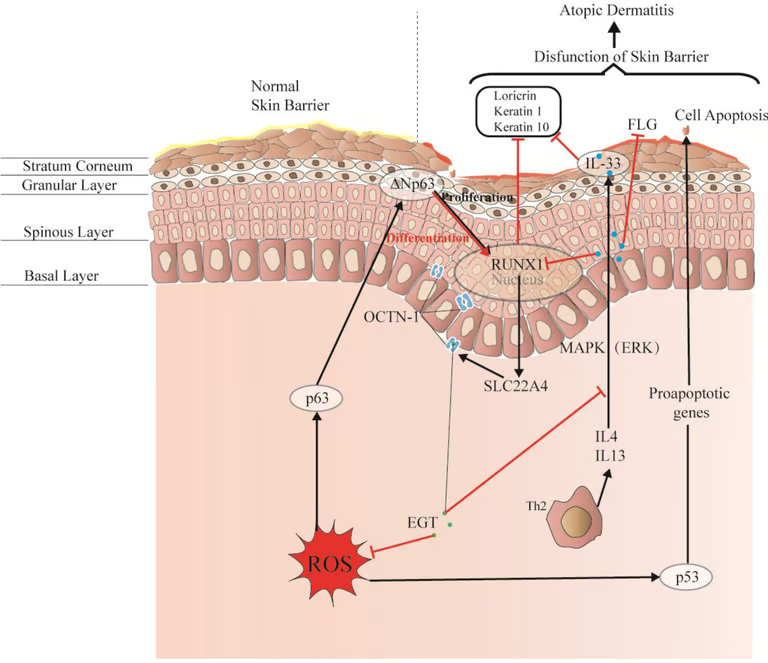
Chronic oxidative stress is a major driver of cellular aging and disease. Unlike general antioxidants, ergothioneine is actively transported into mitochondria and sites of damage through the OCTN1 transporter, concentrating where protection is needed most.
Mechanism of Action
Ergothioneine quenches singlet oxygen, peroxynitrite, and hydroxyl radicals. It accumulates in tissues with high oxidative stress (liver, kidneys, brain), and protects mitochondrial DNA and proteins from degeneration.
Scientific Evidence
• Cheah et al. (2013) demonstrated that knockout of the ergothioneine transporter in C. elegans shortened lifespan and increased oxidative damage.
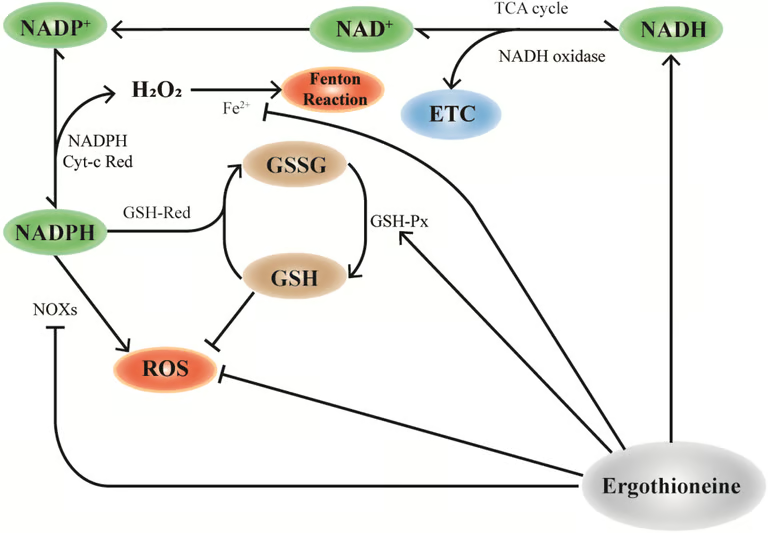
• Human tissues actively retain ergothioneine, suggesting evolutionary selection for its protective role.
Conclusion
Ergothioneine acts as a targeted antioxidant, protecting cellular integrity in high-stress environments. It plays a unique role in aging prevention and mitochondrial resilience.
References
-
Cheah, I. K., Ong, R. L., Gruber, J., Yew, T. S., Ng, L. F., Chen, C. B., … & Halliwell, B. (2013). Knockout of a putative ergothioneine transporter in Caenorhabditis elegans decreases lifespan and increases susceptibility to oxidative damage. Free Radical Research, 47(12), 1036–1045. https://doi.org/10.3109/10715762.2013.848398